Fort Pierce Mold Pros logo
Get Estimate

Mold Inspection & Testing Fort Pierce FL You Can Trust

Lab-backed mold testing Fort Pierce homeowners rely on


Mold inspection and testing in Fort Pierce, FL can help identify moisture concerns, visible or suspected growth, and situations where targeted sampling is useful. Licensed assessors inspect accessible areas with moisture meters and thermal imaging and arrange laboratory sampling when the findings justify it. If you have smelled something musty since the last storm, call us at +17722624441.

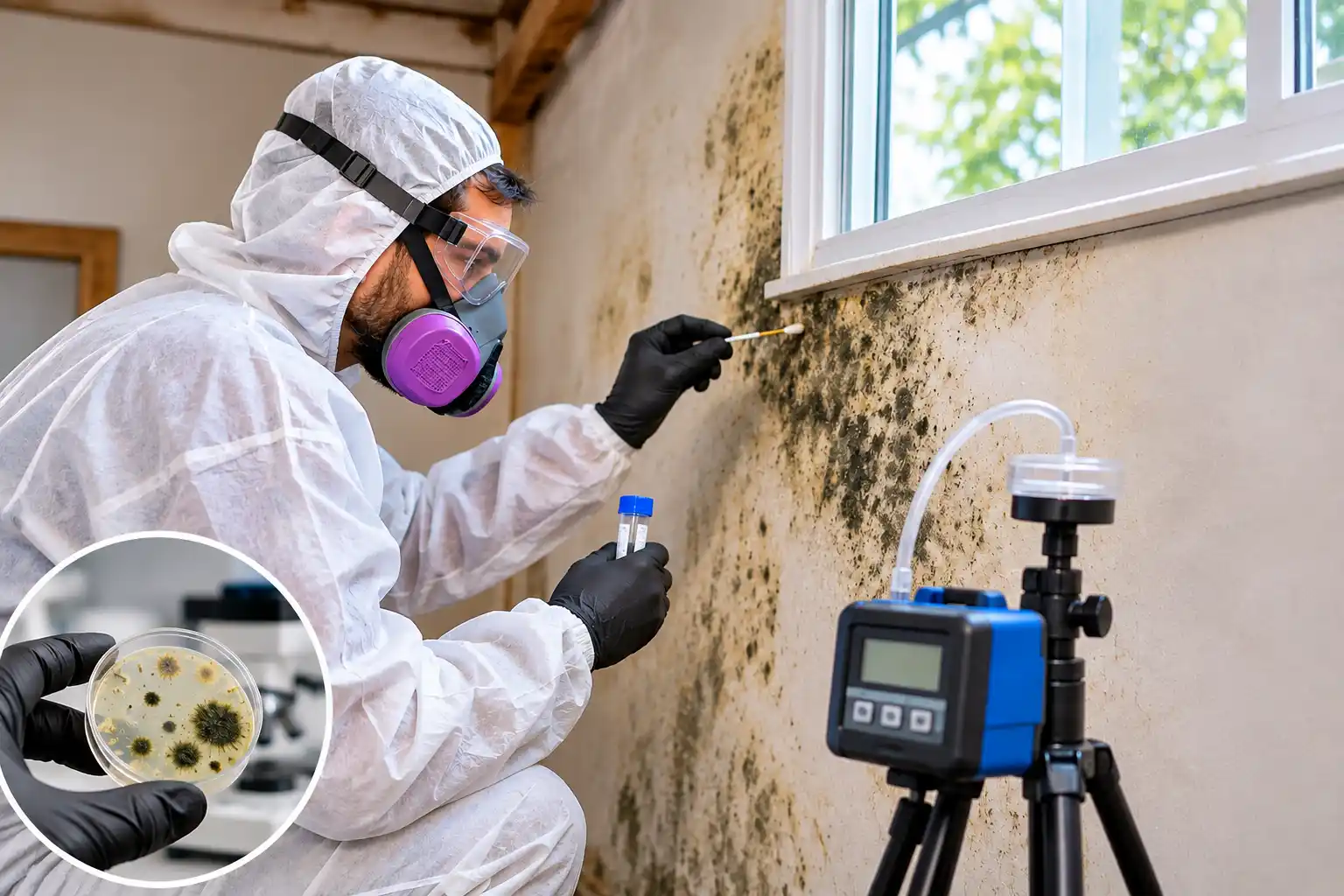
Inspector examining wall mold beside indoor air sampling equipment
Licensed Licensed & Bonded
Fully Insured Insured & Bonded
24/7 Emergency Same-Day Response
Professional Service Experienced Mold Pros in Fort Pierce

What Our Mold Inspection & Testing Includes

The assessment focuses on relevant building conditions: evaluating moisture, recording visible or suspected growth, and documenting findings in a written report. Lab fees for standard air and surface samples are included in the quoted price. If you want additional clearance sampling after remediation, or testing at a second property, we quote that separately before we schedule.

Full Visual Walkthrough

Every accessible room, the attic, the crawl space, and the HVAC closet get inspected for staining, warping, visible growth, and musty odors. We check under sinks, around windows, and along exterior walls where Fort Pierce humidity does the most damage.

Thermal Imaging & Moisture Readings

A thermal imaging camera and moisture meter map hidden water behind drywall, under flooring, and inside ceiling cavities. Readings are logged and included in your report so you can see exactly where the moisture is concentrated.

Air & Surface Sampling

Calibrated air pumps collect spore samples from affected zones, and sterile swabs collect surface samples where growth is visible. Samples ship to an accredited lab the same day, with results typically back within 24 to 48 hours.

Written Report With Lab Results

You receive a report with photos, moisture readings, sample locations, species identification, and spore counts. It is formatted for insurance adjusters, realtors, and remediation contractors, so nobody has to ask for a second document.

Findings Walkthrough

After assessment findings and any requested lab results are available, the assessor can explain the observations and recommended next steps. If remediation is needed, we explain the scope. If it is a ventilation or humidity fix, we tell you that too.

Mold Inspection & Testing Fort Pierce FL Explained


Mold inspection and testing in Fort Pierce, FL examines building conditions, moisture sources, and signs of mold. Targeted sampling may help answer specific questions when appropriate. We start with a room-by-room walkthrough, then use a thermal imaging camera and moisture meter to find water hiding behind drywall, under flooring, and inside attic insulation. Air and surface samples go to an accredited lab, and you get a written report with lab results, photos, and a moisture map you can hand to any contractor or insurer.

Fort Pierce sits in one of the wettest, most humid pockets of St. Lucie County, and that shows up in the buildings here. Summer humidity runs above 80 percent for months, afternoon storms push water through aging roofs, and hurricane season soaks everything from the Indian River waterfront to the inland neighborhoods off Okeechobee Road. If you have spotted black mold growth near a window or smelled musty odors from the AC vents, mold testing Fort Pierce can confirm what is there and how far it has spread.
Our Mold Inspection Process

Every inspection follows the same sequence: find the moisture, confirm the growth, document everything, and hand you a report you can act on. Most homes take two to four hours on site.

01

Schedule

Call or book online — a real human picks up and confirms a 2-hour arrival window.

02

Diagnose

Licensed tech inspects on-site, then walks you through the cause and your options.

03

Fix

The job is completed to code and done right the first time — no shortcuts, no surprises.

04

Documentation

We explain the work completed, share relevant documentation, and outline the next steps.

Tools and Methods We Use

Tools & Equipment

Thermal Imaging Camera

Reads temperature differences on walls, ceilings, and floors to reveal trapped moisture behind surfaces without cutting into drywall. Every inspection includes a full thermal scan of suspect areas.

Moisture Meter

Confirms the thermal camera's findings with a direct moisture reading. We log readings at each suspect location and include them in your report so the data is verifiable.

Borescope

A small inspection camera can help view accessible cavities where permission and safe access allow. Images alone cannot identify the mold species.

Calibrated Air Sampling Pumps

Draw a measured volume of air through a spore trap cassette. The lab compares indoor spore counts against an outdoor baseline to determine whether indoor air quality is affected.

HEPA Vacuum and Air Scrubber

HEPA vacuums and air scrubbers are remediation equipment. If cleanup is needed, it is planned separately from an independent mold assessment.

Dri-Eaz and Phoenix Restoration Equipment

Professional dehumidifiers and air movers used to dry wet structures after the moisture source is fixed, so conditions do not support new growth.

Methods & Standards

IICRC S520 Assessment Protocol

A professional reference for mold-related restoration practices. It guides how we scope the inspection, where we sample, and how we interpret lab results. Following it means your report is consistent with what insurers, realtors, and remediation contractors expect to see.

Zone-Based Air Sampling

We sample each affected zone separately plus an outdoor baseline. Indoor and outdoor spore counts can inform an assessment when interpreted alongside observations, sampling limitations, and moisture findings.

Moisture Source Tracing

Mold needs water. We trace every finding back to its moisture source, whether that is a roof leak, a failed vapor barrier, a slow plumbing drip, or humidity from a failed attic fan. Fixing the source is what keeps growth from returning.

Documented Chain of Custody

Every sample is labeled, logged, and shipped to an accredited lab with a chain-of-custody form. That documentation is what makes the results usable for insurance claims and real estate transactions.

When to Schedule Mold Inspection & Testing

01

You had a roof leak or window leak during the last storm and the ceiling or wall dried on its own.

What we do: We inspect the area with a thermal imaging camera and moisture meter to check for trapped water behind the surface. If readings are elevated, we collect air and surface samples and document the moisture path in your report.

→ You know within two to three days whether the leak left active growth behind, and you have a report to support an insurance claim if it did.

02

Your AC has been running nonstop and you notice a musty smell when it kicks on.

What we do: We inspect the air handler, evaporator coil, and accessible ductwork for HVAC mold, then take air samples at the return and in affected rooms to measure spore counts.

→ You get a clear answer on whether the system is the source, plus a scope for duct and coil cleaning if it is.

03

You are buying or selling a home in Fort Pierce and the inspector flagged a stain in the attic or crawl space.

What we do: We perform a full inspection of the flagged area plus the surrounding structure, collect samples, and deliver a written report with lab results that both sides of the transaction can use.

→ The deal moves forward with a documented scope instead of an open-ended negotiation.

04

Someone in the house has new allergy symptoms and you cannot find a cause.

What we do: We run air samples in multiple zones to compare indoor spore counts against an outdoor baseline, and we inspect the attic, crawl space, and HVAC system for hidden growth.

→ You learn whether indoor air quality is the problem and, if so, exactly where the contamination is coming from.

How Mold Inspection Works in Fort Pierce

Fort Pierce has a mold problem built into its climate. Summer humidity sits above 80 percent for months, afternoon thunderstorms push water through aging roofs, and hurricane season soaks everything from the Indian River waterfront to the inland blocks near Okeechobee Road. Homes built before the 1990s often have minimal vapor barriers in the crawl space and attic ventilation that was never sized for this humidity. That combination means moisture lingers, and lingering moisture means growth. When we run a mold inspection in Fort Pierce FL 34950, we pay extra attention to crawl spaces, attic sheathing, and the air handler closet, because those are the three spots we find problems most often. If you need emergency mold testing Fort Pierce after a storm or a burst supply line, call us and we will prioritize a same-day visit. We also serve White City, Vero Beach, Jensen Beach, Stuart, and Palm City, so if you are anywhere in St. Lucie County, we can get to you.

Neighborhoods We Serve

  • Downtown Fort Pierce

    Older homes near the riverfront often have original crawl spaces with failing vapor barriers. Humidity off the Indian River keeps those spaces damp year-round, which is where we find most crawl space mold.

  • White City

    A mix of older and newer construction with a lot of mature tree cover. Shade keeps roofs and siding damp longer after rain, and clogged gutters push water into fascia and soffits.

  • Fort Pierce 34949 Area

    Coastal properties take the brunt of salt air and storm-driven rain. Window and door seals fail first, and water gets into wall cavities behind the trim.

  • Fort Pierce 34982 Area

    Many homes here have attic-mounted air handlers. When the condensate drain clogs, water pools in the pan and saturates nearby insulation and ceiling drywall.

Local Conditions We Plan For

  • Year-round humidity above 80 percent in summer

    Interior spaces stay damp without active ventilation. Attics and crawl spaces are the first to show growth, and AC systems work overtime, which raises the risk of HVAC mold.

  • Hurricane season from June through November

    Storm-driven rain finds every weak point in a roof or window. Water that gets in and dries slowly leaves ideal conditions for mold after flooding, which is why we see a spike in inspection calls from August through October.

  • Aging housing stock with minimal vapor barriers

    Older Fort Pierce homes often lack proper crawl space encapsulation. Ground moisture rises into the structure, and the fix requires both removal and a vapor barrier upgrade.

  • Salt air and coastal wind exposure

    Coastal properties see faster deterioration of seals, flashing, and paint. Small failures let water in behind finishes, where it stays hidden until a thermal scan finds it.

Slow Roof Leak Behind Painted Drywall

Before

A homeowner in the 34950 area had a faint musty smell in the hallway for weeks. The paint looked fine, and no stain was visible. A thermal scan found a temperature anomaly along the ceiling line, and the moisture meter read 28 percent, well above the 15 percent threshold for drywall.

After

Lab results confirmed active mold growth behind the drywall from a slow roof leak. The report documented the moisture path and species, and the homeowner's insurance approved the claim. Remediation removed about 40 square feet of drywall and insulation, and a post-remediation air sample came back clear.

Maintenance: We recommended a roof inspection every spring before hurricane season and a humidity check in the hallway each fall. Catching the next leak early keeps it from soaking the same cavity again.

Before

A White City homeowner noticed dark spots on the attic sheathing during a routine check. The attic exhaust fan had failed the previous summer, and humidity had been trapped up there for months. Surface samples confirmed mold growth across roughly 200 square feet of sheathing.

After

We documented the failed fan as the moisture source and scoped the removal. After the fan was replaced and the sheathing treated with an antimicrobial coating, a clearance air sample showed spore counts back to normal outdoor baseline levels.

Maintenance: We suggested a thermostat-controlled attic fan and an annual pre-summer check of attic ventilation. That combination keeps humidity from building up during the hottest months.

Before

A rental property in the 34949 area had a musty odor that tenants complained about. The crawl space had no vapor barrier, and ground moisture was rising into the floor joists. Moisture meter readings on the joists came back above 20 percent.

After

Testing confirmed crawl space mold on the joists and subfloor. After removal and treatment, we installed a new vapor barrier and sealed the access points. A follow-up moisture check 30 days later showed joist readings back under 14 percent.

Maintenance: We recommended checking the vapor barrier each spring and keeping the crawl space vents clear. A dry crawl space keeps the floors above it dry too.

Problems Our Mold Inspection Solves

Most mold calls start with something you noticed: a smell, a stain, a spot that keeps coming back. Testing turns that vague worry into a documented answer you can act on.

Problem

Musty odors with no visible source

A persistent musty smell usually means active growth in a wall cavity, crawl space, or air handler. Ignoring it lets spores circulate through the whole house and can trigger allergies and respiratory issues for your family.

Our Fix

We use a thermal imaging camera and borescope to trace the odor to its source without tearing open walls. Once we find the moisture pocket, we sample the air and any visible growth, then document the location in your report so the fix is targeted, not guesswork.

Problem

Mold after flooding or a roof leak

Mold after flooding can colonize wet drywall and insulation within 24 to 48 hours. By the time you see it, the growth is often larger than the visible patch, and an insurance claim without lab documentation is easy to deny.

Our Fix

We inspect the full moisture path, not just the visible spot, and collect samples that confirm species and spread. The written report gives your adjuster the documentation they need, and it gives any remediation crew a clear scope to work from.

Problem

Elevated spore counts from HVAC mold

HVAC mold grows on the evaporator coil and inside ductwork, then spreads spores through every room the system serves. Indoor air quality drops, allergy symptoms worsen, and the system keeps recontaminating clean spaces.

Our Fix

We sample the air handler and each affected zone separately to isolate the source. If the coil or ducts are contaminated, the report identifies it and we recommend HVAC and air duct mold removal with a post-remediation clearance sample to confirm the fix.

Problem

Mold found during a real estate transaction

A buyer or inspector flags a stain and the deal stalls. Without a proper inspection, sellers either overpay for unnecessary work or under-disclose and risk the sale falling apart later.

Our Fix

We provide a documented inspection with lab results that both sides can rely on. It defines the actual scope, so the seller knows what to fix and the buyer knows what they are getting. Reports are typically delivered within two to three days of the visit.

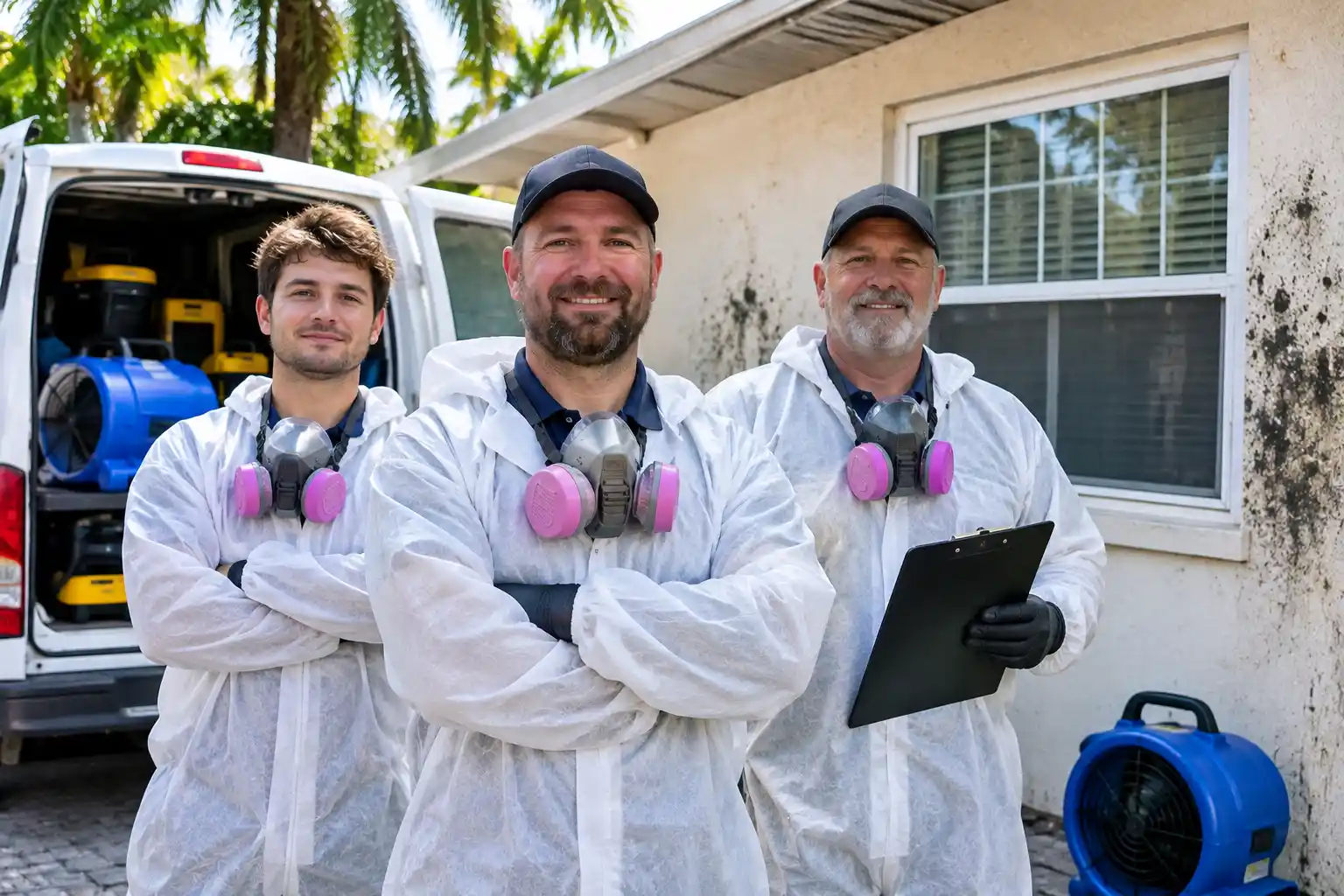
Three mold remediation workers in protective coveralls outside a house

Why Fort Pierce Homeowners Get Mold Testing

Guessing about mold costs money. Assessment documents moisture conditions and visible growth. Air or surface samples can provide additional information when indicated, but sampling alone does not establish whether a home is safe. Here is what a proper inspection gets you.

  • Lab-Confirmed Species

    We collect air and surface samples and send them to an accredited lab, so you know whether you are dealing with common Cladosporium or toxic mold exposure risk from Stachybotrys. Results come back with species identification and spore counts, usually within 24 to 48 hours. No guesswork, no scare tactics.

  • Hidden Moisture Found

    A thermal imaging camera and moisture meter read what your eyes cannot. We routinely find wet drywall behind fresh paint and saturated insulation above ceiling stains in Fort Pierce homes. Pinpointing the water source is the difference between a one-time fix and mold that returns every rainy season.

  • Insurance-Ready Reports

    Our written reports include photos, moisture readings, sample locations, and lab results, formatted so your insurance adjuster can process a water damage mold claim without back-and-forth. If you had mold after flooding from a named storm, that documentation matters when you file.

  • Scope Before You Spend

    Testing tells you how big the problem really is. A small patch behind a bathroom vanity is a different job than HVAC mold spreading spores through every room. Knowing the scope first means you get accurate quotes instead of open-ended estimates that grow once walls come down.

Licensed, Certified, and Local

Licensed & Certified

  • IICRC Certified Mold Remediation — issued by Institute of Inspection, Cleaning and Restoration Certification
  • ACAC Certified Microbial Remediation — issued by American Council for Accredited Certification
  • NORMI Certification — issued by National Organization of Remediators and Mold Inspectors
  • EPA Lead-Safe Certified — issued by U.S. Environmental Protection Agency
  • OSHA 10 — issued by Occupational Safety and Health Administration

Verified Reviews

Google ★★★★★4.9

Called on a Monday about a musty smell and they were out Tuesday morning. Thermal camera found the leak in ten minutes. Report came back in two days with lab results. Straightforward pricing, no pressure to buy anything extra.

Yelp ★★★★★4.8

We used them for a pre-sale inspection after the buyer's inspector flagged a stain. They documented everything, and the report satisfied both realtors. The deal closed without another round of negotiation.

BBB ★★★★★5.0

Professional from the first phone call. They explained what the inspection would cover and what it would cost before scheduling. The technician was on time, thorough in the attic and crawl space, and patient with my questions.

Google ★★★★★4.9

After the last storm we had water in the ceiling. They came out same day, found the moisture path, and gave us a report our insurance accepted without a fight. Would call them again without hesitation.

Mold Inspection Expertise You Can Verify

Our technicians hold IICRC Certified Mold Remediation credentials and follow the IICRC S520 standard for mold assessment and remediation. Several carry ACAC Certified Microbial Remediation and NORMI Certification as well. We work with 3M and Fiberlock products and use Dri-Eaz and Phoenix Restoration Equipment for drying and air handling when a job moves from inspection into removal. We also hold EPA Lead-Safe Certified status and OSHA 10 training, which matters in older Fort Pierce homes where disturbing painted surfaces is part of the work. Every inspection follows the same documented protocol, so your report holds up with insurers, realtors, and contractors.

  • IICRC Certified Mold Remediation technicians following the IICRC S520 assessment standard
  • ACAC Certified Microbial Remediation and NORMI Certification on staff
  • EPA Lead-Safe Certified and OSHA 10 trained for work in older housing stock
  • Thermal imaging camera, moisture meter, and borescope used on every inspection
  • Lab samples processed by an accredited third-party laboratory, not in-house guesswork
Get Started Today
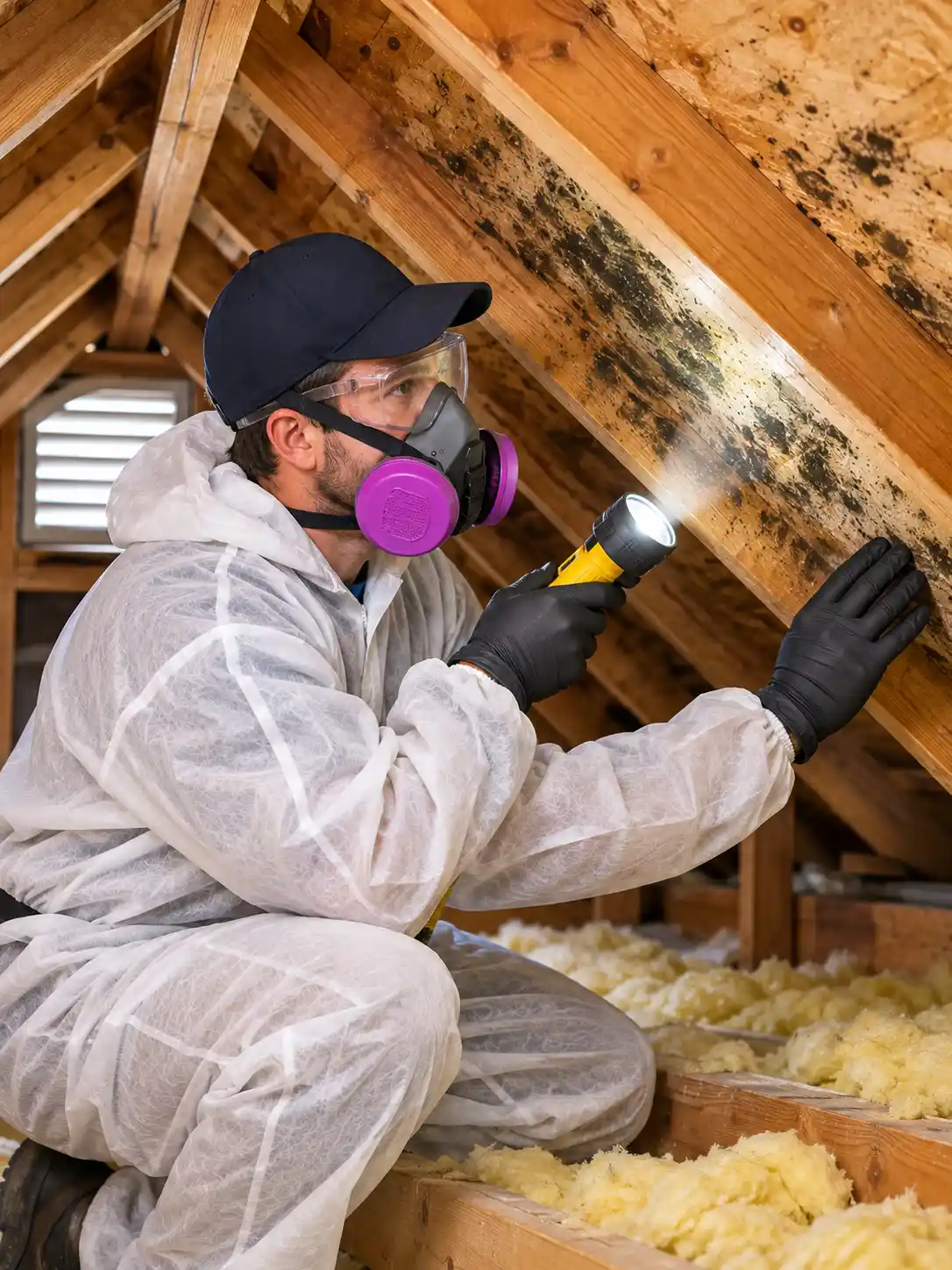
Worker in protective gear examining dark staining on attic roof framing

Frequently Asked Questions

Real answers to the questions we hear most often from local homeowners and property managers.

How much does mold testing cost in Fort Pierce FL?
Most residential inspections run $300 to $650 in 2026, depending on square footage and how many samples we collect. A basic single-zone inspection with two air samples sits at the low end; a full home with attic, crawl space, and HVAC sampling runs higher. We quote the exact price before we schedule, so there is no surprise on the invoice.
What does a mold inspection include in Fort Pierce?
A full inspection includes a room-by-room visual walkthrough, attic and crawl space checks, thermal imaging and moisture meter readings, a borescope look inside wall cavities, and air or surface sample collection. You get a written report with lab results, photos, and a moisture map. Most homes take two to four hours on site.
How long does mold testing take in Fort Pierce Florida?
The on-site portion takes two to four hours for an average home. Air samples take about 15 minutes per zone, and the lab usually returns results within 24 to 48 hours. Add it up and you typically have a complete report in your hands within two to three days of the visit.
Do I need mold testing before remediation in Fort Pierce?
Yes, and it protects your wallet. Testing confirms the species, locates the moisture source, and defines the scope before anyone opens a wall. Without it, a remediation crew can miss a hidden source and the growth returns within a season. The report also gives your contractor a documented scope and gives your insurer the proof they need.

Schedule Mold Inspection & Testing Fort Pierce FL Today

Musty smell, water stain, or a recent leak? Do not wait for it to spread. Call Fort Pierce Mold Pros at +17722624441 and we will schedule your inspection, often the same day. Licensed, insured, and local to St. Lucie County.

Call Now Book Inspection

Contact Fort Pierce Mold Pros

For mold assessment or testing questions, call (772) 262-4441. Explain whether you have visible growth, hidden moisture, a property transaction or a need for independent post-remediation verification.

Or call us right now at (772) 262-4441 — we answer.

Your enquiry may be shared with local mold-service providers so they can respond. Privacy Policy.

Fort Pierce Mold Pros


  • Address

    2007 Totten Rd, Fort Pierce, FL 34947

  • Hours

    Mon–Fri: 7AM – 7PM
    Sat: 8AM – 4PM
    Sun: Emergency Only
    24/7 Emergency Available

Call (772) 262-4441 Get Quote
Call Quote